Nate Bargatze, Meet Tom Raabe
March 7, 2026
I’m a daily-reader of and sometime-contributor to The American Spectator, and, along the way, I’ve become happily acquainted with Tom Raabe’s writing, including recent pieces on the passing of Robert Duvall (and on his movie, The Apostle); suggestions to spice up the Winter Olympics, e.g., with the addition of a moat just shy of the landing zone, one featuring a polar bear floating on ice; and the way that Indiana’s NCAA football championship gives hope to Cornhusker “Nebrasketball.”
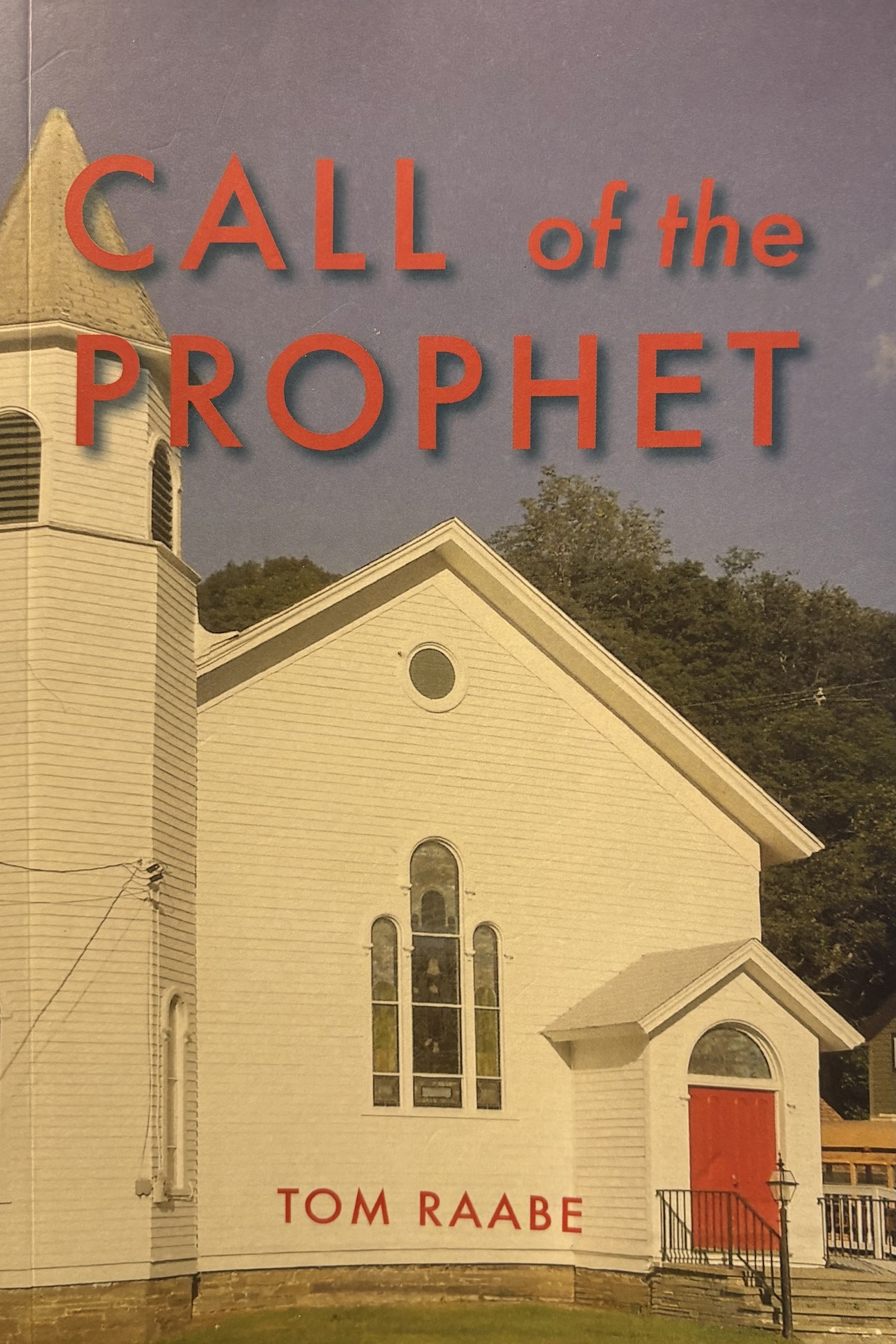
We’d gotten acquainted through the magazine, and, learning that I’d been a pastor, he sent me a copy of his novel, Call of the Prophet, tracking the early ministry of a small-town Lutheran cleric named Martin Wenge. It’s a page turner, sparking recognition right along (some of it painful) for those who’ve spent time in vocational ministry. But Raabe’s sense of humor both sweetens and salts the pages. As I wrote to him,
What a great workout . . . [I’ve been] happily filling the margins and text with a bunch of notes, underlines, stars, questions marks, and commentary . . . As for the story, it was absorbing, and it struck chords and nerves as I looked back over my own days as a senior pastor (17 years) . . . You have such an eye for telling detail, your descriptions lapidary. A masterclass in depiction.
And I listed a number of the images, expressions, and insights that I’m likely to borrow for use down way—the “Hansel and Gretel” notion of God’s calling to the pastorate (with breadcrumbs marking the direction); the “worldly trinity of me, myself, and I”; the expressions, “Find four Lutherans; find a fifth” and “the lesser of two shames.”
In the first chapter, I was glad to cringe at the woke, preachy prayer of a big-shot pastor who, head bowed, referred to those in the room as “we who reside unlawfully and egregiously on the ancestral homelands of the Cheyenne, Arapaho, and Ute Nations, in sorrow and repentance for our complicity in the evil ways of oppression and victimization perpetrated in our land and by our nation on other lands.” And then, in the last chapter, I underlined the insightful counsel of one of Wenge’s ministerial acquaintances:
Marrtin, we get only so many opportunities to be prophetic in the church. It’s like God gives us a window, and we have to take it while it’s open, and if we don’t, he shuts it . . . Look at history, Wenge, recent history even. When we aren’t prophetic, we forfeit the opportunity to be prophetic. Our preachers didn’t preach against divorce thirty years ago, and now they can’t preach against divorce. When’s the last time you heard a sermon on divorce? [Wenge says he can’t think of one.] Right! Because if a preacher lambasts divorce, he’d have half his congregation walk out on him. Heck, maybe even his wife—his second wife. Same with abortion. They didn’t preach against abortion twenty years ago; now they can’t. Ditto for homosexuality. If we don’t seize the day, we lose the day . . . Or, take world religions. We didn’t call Buddhism or Hinduism or Islam the idolatrous faiths they are, we didn’t condemn them as false paths, and now, not only do we do worship services with Buddhists, for example, but a preacher who tells the truth from the pulpit about it would be shamed right out of the church.
Certainly, this problem has bitten the mainlines. And it’s a constant threat to Southern Baptists who place careerism, peace, and marketing above biblical truth.
In closing, let me note his awesome vocabulary. It brought to mind one of the bits from my favorite comedian, Nate Bargatze. Here’s a slice:
I like the idea of reading. I even buy books. But these books are the most words. And it’s every book. You just open it, and you’re like, “What are you talking about?” And they don’t let up. Every page, just more words. How ‘bout you put some blank pages in there? Why don’t you let me get my head above water for two seconds.
Bargatze was concerned with “the most words.” Raabe delighted me with the many cool words at his disposal, generously deployed. I told him that I typically highlight words that catch my attention, and I did so throughout his book, to include, for example, those
. . . that I haven’t seen used in years (‘rapscallion’); with fond associations (‘paterfamilias’ in O Brother, Where Art Thou?); which are cool constructs (‘pifflemeter’); that take me across language barriers for new finds, as with prie-dieu [I knew the French words, but didn’t know it was a piece of devotional furniture]; that put fun into the game (‘horsing around,’ ‘keester,’ ‘druthers,’ and ‘boonies’); with patina (‘davenport’); that connect with stuff I’ve learned in my overseas mission work, as with Muslims (‘hegira’); that I picked up in a writing assignment (‘interstices’), etc.
All in all, my list of standout goodies ran to well over a hundred. And there were more than a dozen legit expressions I don’t think I’d seen before, including ‘cerulean tarns,’ ‘apopemptic,’ ‘squiffy,’ ‘taurine,’ and ‘descried.’ I bet you’ll have a few. And some serious fun as you sort them out.